
Getting on your bike and heading out can feel like a simple part of the day. Whether you are cycling to work, meeting friends, running errands or going out for some exercise, it is easy to get into the habit of just grabbing your bike and riding away.
However, taking a few minutes to check your bicycle before every ride can prevent many common problems. A quick inspection does not need to be complicated or take a lot of time. In most cases, you can spot obvious issues while your bike is still outside your home.
Small checks can make a big difference. They can help you avoid a flat tyre halfway through your journey, identify a brake problem before you reach a busy road, and notice loose or damaged parts that could affect the way your bike handles.
Here are seven simple things worth checking before every bike ride.
1. Check Your Tyre Pressure
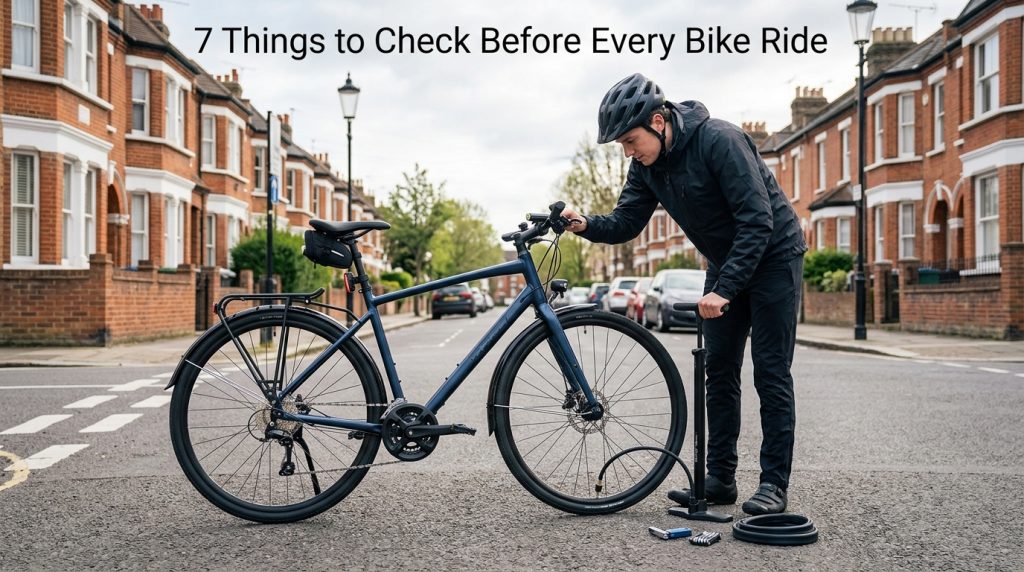
Your tyres are one of the first things you should inspect before riding. Proper tyre pressure helps your bicycle handle better and can make the ride feel much smoother.
Press the tyres with your fingers and look for any signs that one feels softer than the other. A tyre that looks noticeably low may need more air before you set off.
It is also worth checking the tyre sidewall for the recommended pressure range. Avoid guessing, especially if you are unsure about how much air your tyres need. An accurate pump with a pressure gauge can make this much easier.
While checking the pressure, look closely at the tyre surface. Watch for cuts, cracks, embedded pieces of glass, stones or other sharp objects. Also check for unusual bulges or areas where the tread looks badly worn.
A few seconds spent looking at your tyres can help you catch a problem before it becomes a puncture on the road.
2. Test the Brakes
Good brakes are essential, particularly when cycling through busy streets or areas with heavy traffic.
Before riding, squeeze both brake levers and make sure they feel normal. The levers should not pull all the way back to the handlebars. If they feel unusually loose, spongy or weak, it is worth investigating before riding.
Check that the brake pads are making proper contact when you apply the brakes. For rim brakes, look at the condition of the pads and make sure they are not heavily worn. For bikes with disc brakes, inspect the pads and rotor for obvious signs of wear or damage.
You can also test the brakes gently while moving the bike a short distance. Make sure both the front and rear brakes respond smoothly.
If you hear grinding, squealing or another unusual noise, do not simply ignore it. Strange sounds can sometimes point to dirt, worn brake pads or another problem that needs attention.
3. Look Over the Chain and Drivetrain
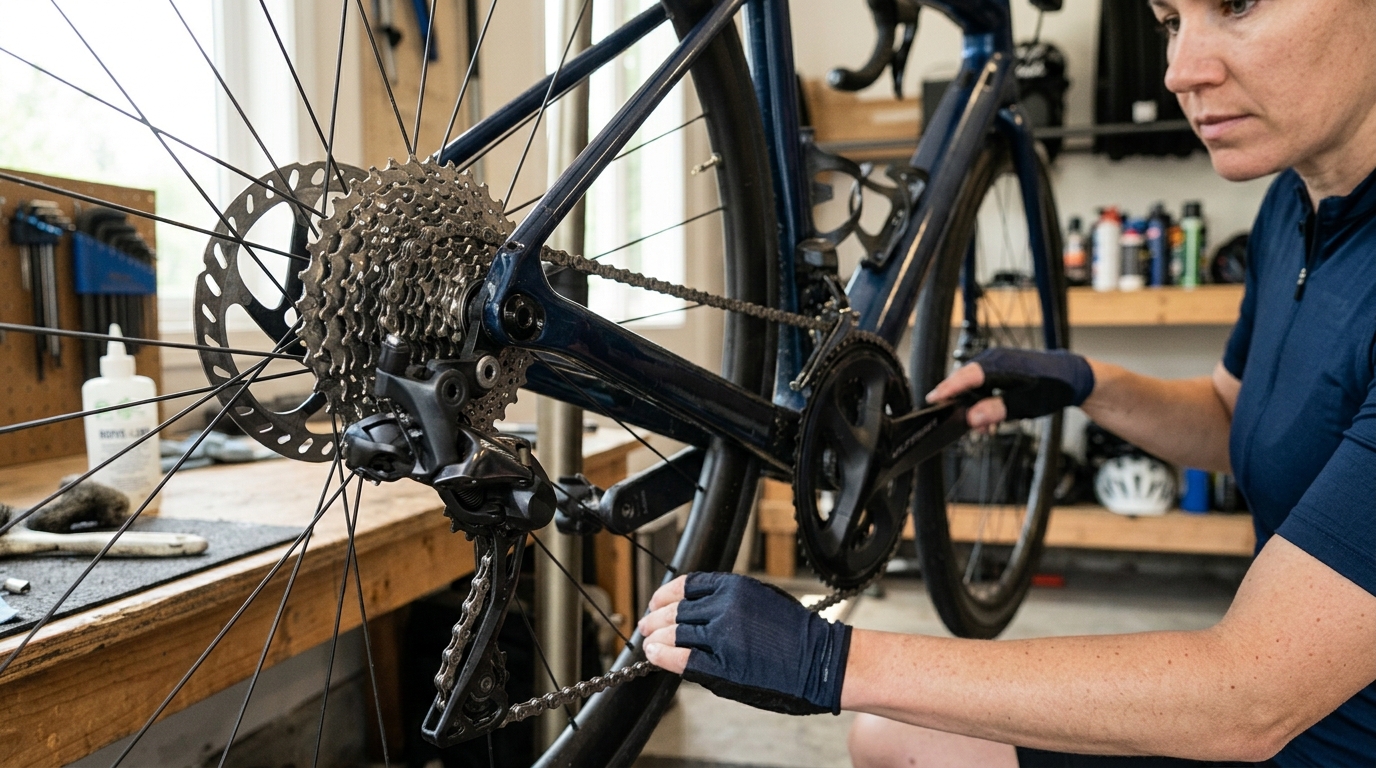
The chain, cassette and chainrings work together every time you pedal, so it is useful to give the drivetrain a quick look before heading out.
Check the chain for excessive dirt, rust or signs of poor lubrication. A very dry chain may make a noticeable noise when you turn the pedals. On the other hand, a chain covered in thick black grime may need cleaning rather than another layer of lubricant.
Turn the pedals slowly and watch the chain as it moves. It should run smoothly without catching or making unusual sounds.
If you are preparing for a longer ride, check that the gears shift correctly as well. A quick test can reveal if the chain skips, hesitates or refuses to move into a particular gear.
Keeping the drivetrain clean and properly lubricated can also help reduce unnecessary wear. It is much easier to deal with a small issue at home than halfway through a long journey.
4. Check the Wheels
A wheel problem may not always be obvious at first glance, so take a moment to inspect both wheels before you ride.
Look at the rims and tyres and make sure there is no visible damage. Spin each wheel and watch how it moves. If it wobbles noticeably from side to side, it may need attention.
You can also check the spokes visually. A broken or very loose spoke can affect the strength of the wheel and may become a bigger problem if it is ignored.
Make sure the wheels are properly secured to the bicycle. Depending on your bike, this may involve checking quick-release levers, thru-axles or other fixing systems.
If you have recently hit a pothole, kerb or another hard obstacle, pay extra attention to the wheels and tyres. Even when there is no obvious damage, an impact can sometimes cause a problem that becomes noticeable later.
5. Make Sure the Handlebars and Seat Are Secure
Your riding position and steering depend on several components being firmly attached to the bike.
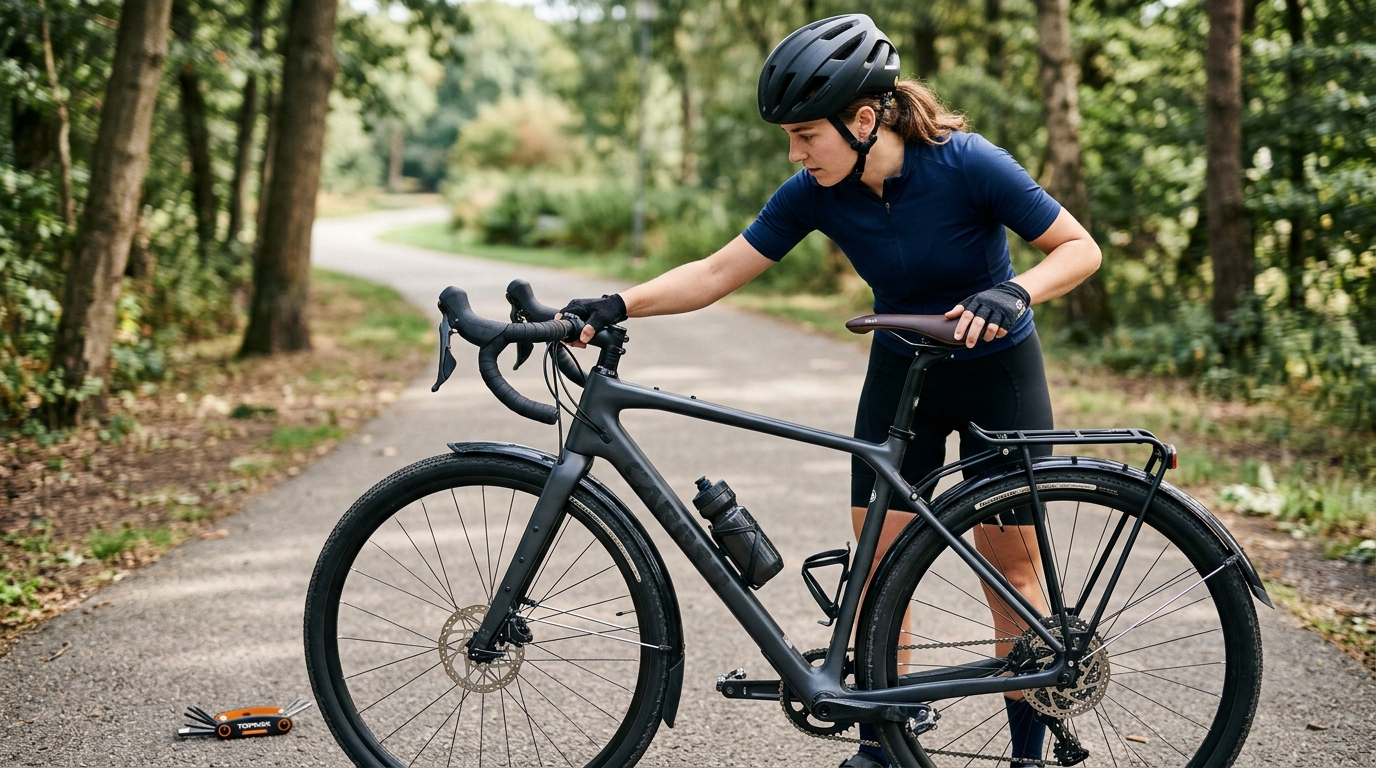
Before setting off, hold the handlebars and gently check for unusual movement. They should feel secure rather than loose or twisting independently from the front wheel.
Do the same with the saddle. Try moving it gently from side to side and up and down. A small amount of movement may indicate that the saddle clamp needs attention.
It is also worth checking other parts that are easy to overlook, such as bottle cages, mudguards, racks and accessories. Loose fittings can create rattling noises and may eventually fall off during a ride.
Do not simply tighten every bolt as hard as possible. Bicycle components often have specific tightening requirements, and excessive force can damage them.
6. Check Your Lights and Reflectors
If there is a chance that your ride will continue into low-light conditions, check your lights before leaving.
Switch on the front and rear lights and make sure they are working properly. Check that they are securely attached and pointing in the right direction.
If your lights use replaceable batteries, make sure they are not running low. For rechargeable lights, it is useful to check the charge before a longer trip rather than discovering the problem once you are already on the road.
Reflectors should also be clean and visible. Dirt, mud and road grime can reduce how easily they are seen.
Even during the day, carrying suitable lights can be useful if weather conditions change or your journey takes longer than expected.
7. Take a Final Look at the Whole Bike
Once you have checked the main components, give your bicycle one final walk-around.
Look for anything that seems out of place. Check that cables are not hanging loose, accessories are secure and there are no obvious cracks, leaks or damaged parts.
If your bike has recently been serviced or repaired, take a little extra time to make sure everything looks as it should.
Pay attention to how the bicycle feels when you move it. A wheel rubbing against a brake pad, a loose mudguard or a rattling accessory may become more noticeable once you start riding.
This final check is also a good time to make sure you have what you need for the journey. For a longer ride, that might include a pump, spare inner tube, tyre levers, a repair kit, water and a charged phone.
Why These Checks Matter
You do not need to spend half an hour inspecting your bicycle every morning. A basic pre-ride check can often be completed in just a few minutes.
The important thing is to make it part of your routine. Once you become familiar with your bike, you will start noticing small changes more easily. A tyre that feels softer than usual, a brake lever that suddenly feels different or a chain that sounds noisier than normal can all be useful warning signs.
Regular checks can also help you catch wear before it becomes a more serious problem. This can save time, reduce unexpected repairs and make everyday cycling more enjoyable.
For frequent cyclists, these simple habits are especially useful because a bicycle that is ridden several times a week is exposed to more dirt, moisture, road debris and general wear.
Final Thoughts
A safe and comfortable ride often starts before you even leave your driveway. Checking your tyre pressure, brakes, drivetrain, wheels, handlebars, saddle, lights and other components takes very little time, but it can help you avoid many common problems.
You do not need specialist knowledge to perform a basic inspection. The key is simply to pay attention and take action when something feels or looks different. When a problem is beyond a simple adjustment or check, getting professional help is the sensible next step. For cyclists looking for bicycles, parts, accessories and everyday cycling essentials, Chelsea Bikes is a useful place to find the equipment needed to keep your bike ready for the road.


