
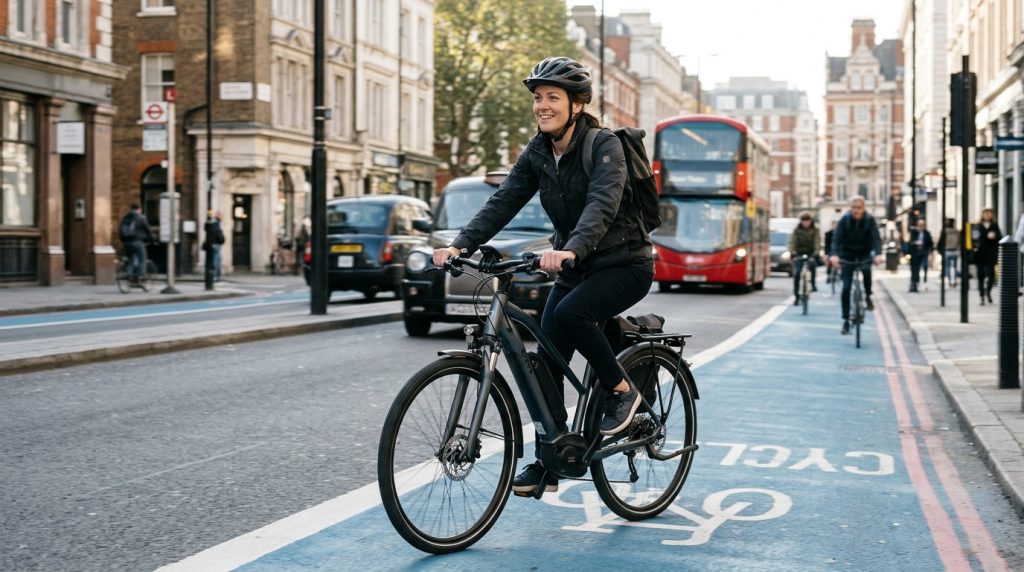
Electric bikes have become a practical option for people who want to travel around town without relying on a car or public transport for every journey. They look similar to ordinary bicycles, but an electric motor provides extra assistance while you pedal. This can make every day journeys easier, particularly when travelling longer distances, carrying a bag or riding into a strong headwind.
For people commuting around London, an electric bike can be a useful way to get to work, visit local shops or meet friends without spending time sitting in traffic. However, an e-bike is not the right choice for everyone. Your journey distance, budget, storage arrangements and charging options all play a part in deciding whether one suits you’re routine.
So, are electric bikes suitable for daily commuting? For many people, the answer is yes. Here is what you should consider before making the switch.
1. Make Your Daily Journey Easier
One of the biggest advantages of an electric bike is the assistance it provides when pedalling. You still need to pedal on a standard UK-compliant electric bike, but the motor helps reduce the effort required to move forward.
This can be particularly useful when setting off at traffic lights, climbing hills or travelling against the wind. If your workplace is several miles from home, the assistance may also make the journey feel more manageable.
London commuting often involves stopping and starting, especially during busy periods. An electric bike can help you maintain a comfortable pace without putting too much strain on your legs. You can arrive at work feeling less tired than you might after the same journey on a conventional bicycle.
You can also adjust the assistance level on many models. A lower setting may be enough on flat roads, while a higher setting can help when you need extra support.
2. Save Time on Busy London Roads
Anyone who travels through London regularly knows that road traffic can make journey times unpredictable. Cars and buses may spend considerable time moving through queues, while finding a parking space near your destination can add another delay.
An electric bike offers an alternative. For suitable journeys, you can use permitted cycling routes and avoid some of the delays associated with motor traffic. Your actual travel time will depend on the distance, road conditions, traffic signals and route you choose.
Planning your route before leaving home can make a noticeable difference. Where possible, choose quieter roads and designated cycle routes rather than unfamiliar, heavily trafficked streets.
An e-bike is particularly useful for commuters whose destinations are too far away for a comfortable walk but close enough to cycle without needing a car. It can also work well for journeys that involve several local stops throughout the day.
Remember that electric assistance does not remove the need to ride carefully. Keep an eye on traffic, signal before turning and leave enough room to stop safely.
3. Spend Less on Everyday Travel
The cost of travelling to work can add up over time. Train fares, bus tickets, fuel, parking and vehicle maintenance can take a significant portion of a monthly budget.
An electric bike has its own purchase and running costs, but charging a battery generally uses much less electricity than the energy required to power a car. Once you own the bike, you will mainly need to budget for electricity, routine maintenance, replacement parts and eventual battery replacement.
Your savings will depend on what you currently spend on travel and how frequently you use the bike. Someone replacing several short car journeys each week may see different savings from someone who already walks or uses an inexpensive travel pass.
Before buying, consider the full cost rather than the purchase price alone. A good lock, suitable lights, a helmet, waterproof clothing and servicing may all need to be included in your budget.
If you plan to use the bike most working days, comparing these expenses with your existing travel costs will help you decide whether the investment makes sense.
4. Choose a Battery Range That Suits Your Commute
Battery range is an important consideration when choosing an electric bike. You need enough charge to complete your usual journey without worrying about running out of assistance before reaching home.
The distance an e-bike can cover on one charge varies by model. Battery capacity, rider weight, luggage, hills, wind, tyre pressure and the selected assistance level can all affect the range.
For example, a commuter travelling five miles each way has different requirements from someone covering twenty miles each way. A longer commute may need a larger battery or an opportunity to recharge at work.
Check the manufacturer’s stated range, but treat it as a guide rather than a guarantee. Real-world conditions can reduce the distance available, particularly when you frequently use the highest assistance setting.
It is also worth checking how long the battery takes to recharge and whether it can be removed easily. If you can charge it safely at home or at your workplace, keeping the bike ready for the next journey becomes much simpler.
5. Think about Comfort and Practicality
An electric bike can make cycling more accessible to people who find a conventional bicycle tiring. The additional assistance may help you manage longer journeys without feeling that every hill or headwind is a challenge.
The type of bike you choose matters, though. A city e-bike is often suited to everyday road use, while a hybrid electric bike may offer more flexibility for mixed surfaces. A folding electric bike can be useful if you have limited storage space or need to combine cycling with other forms of transport.
Pay attention to the riding position, saddle comfort, handlebar height and frame size. If you carry a laptop, work clothes or shopping, consider whether the bike can accommodate a suitable rack or pannier bags.
It is also important to remember that electric bikes are generally heavier than conventional bicycles. Carrying one upstairs or lifting it onto a storage rack may be difficult, especially if the battery cannot be removed.
Try to think about the entire journey, from leaving your front door to securing the bike at work. A comfortable, practical setup is more likely to become part of your everyday routine.
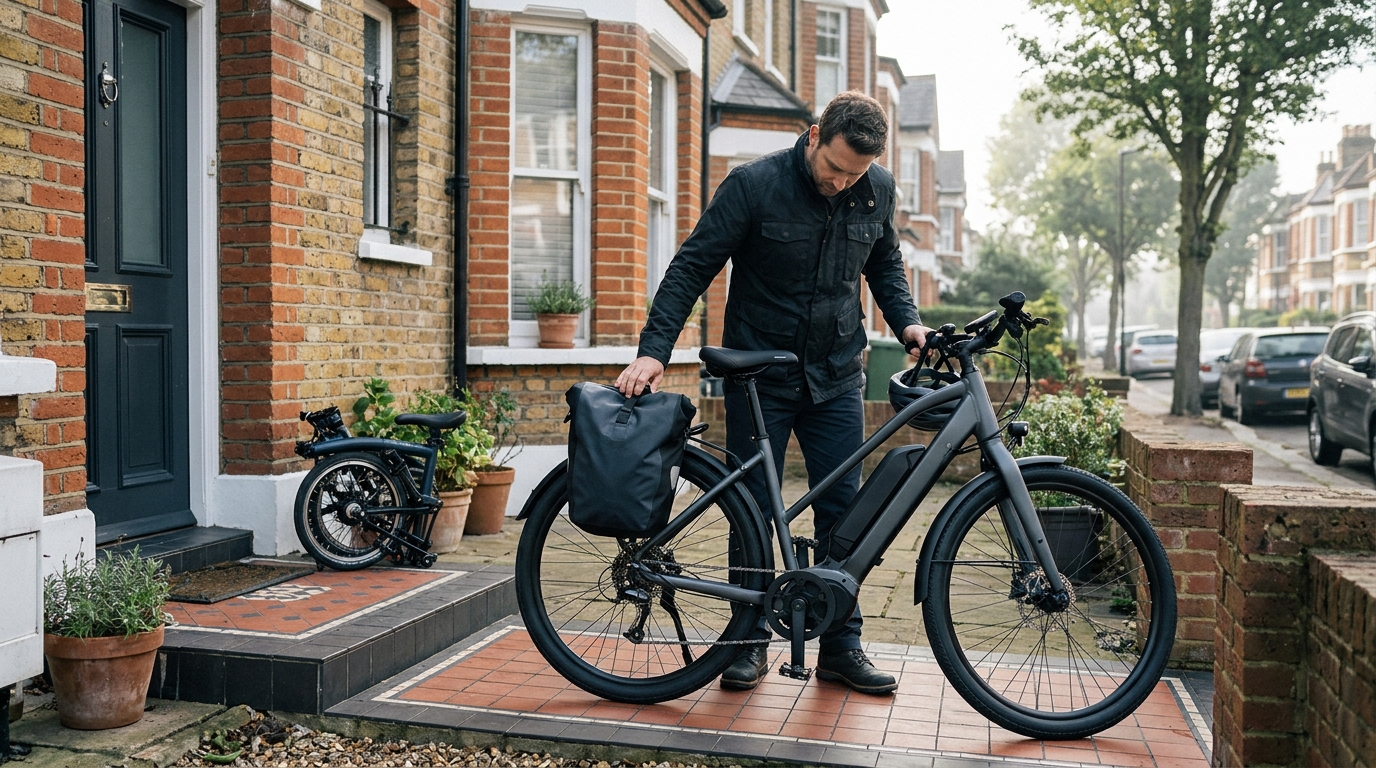
6. Remember That E-Bikes Still Need Maintenance
An electric bike may reduce the effort needed to pedal, but it still requires regular care. The tyres, brakes, chain, gears and wheels need attention just as they would on a conventional bicycle.
Because an e-bike carries additional weight and can help you maintain a higher pace with less effort, checking the braking system and tyre condition is particularly important.
Before riding, check that the tyres are properly inflated, the brakes respond correctly and the lights work. Keep the chain clean and lubricated, and arrange servicing when you notice unusual noises, worn parts or changes in handling.
The electrical components need care as well. Follow the manufacturer’s instructions for battery storage, charging and cleaning. Use the correct charger, avoid damaged batteries and never attempt repairs or modifications that you are not qualified to carry out.
A well-maintained electric bike is more dependable for daily commuting and can help you avoid unexpected interruptions to your journey.
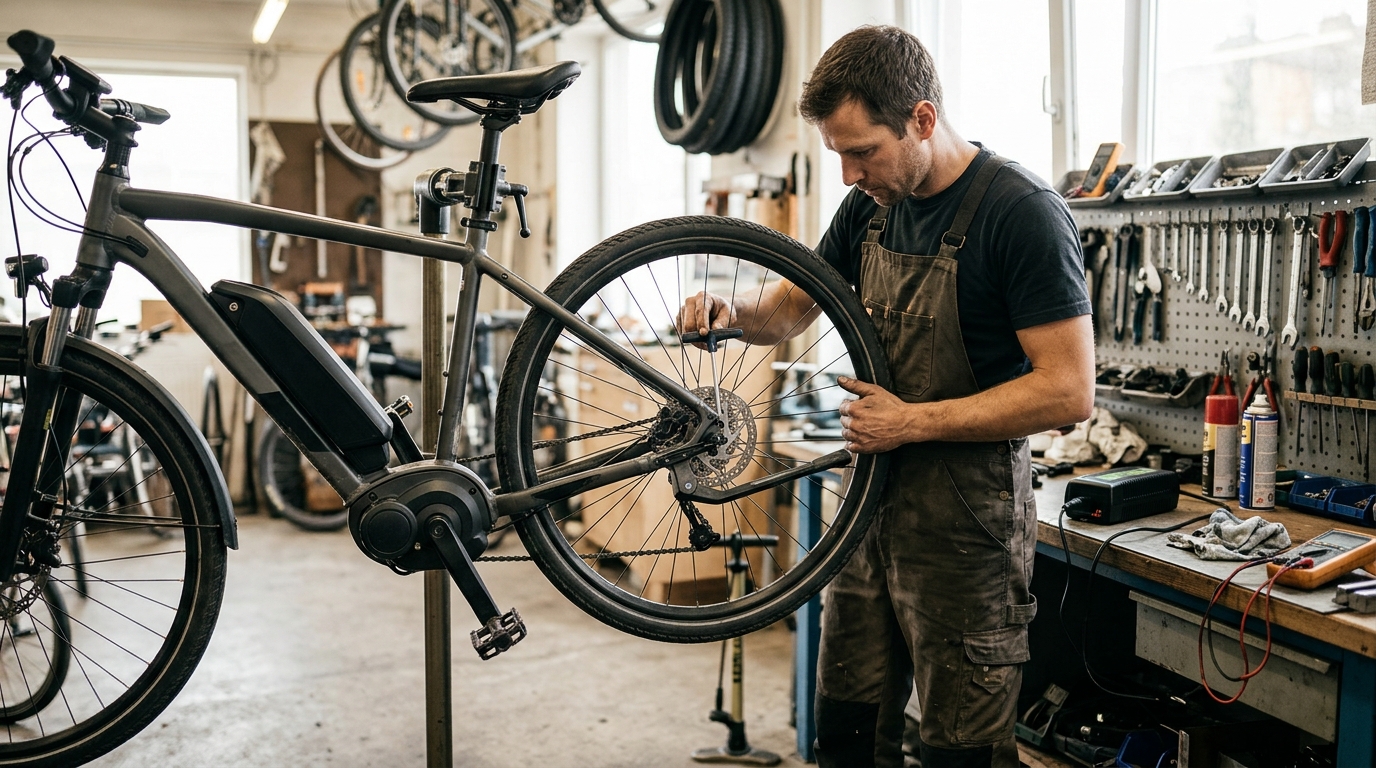
7. Are Electric Bikes Safe and Legal in the UK?
Safety should be part of your decision before buying any bicycle. Electric assistance can make it easier to accelerate, so allow yourself time to get used to the bike’s weight, braking and handling before riding in busy traffic.
Wear suitable clothing, use working front and rear lights when required, and choose a secure helmet that fits properly. In wet weather, allow extra stopping distance and take particular care on slippery road markings, metal covers and corners.
You should also check that the electric bike meets UK requirements. A standard electrically assisted pedal cycle, or EAPC, must have pedals capable of propelling it, a motor with a maximum continuous rated power of 250 watts, and electrical assistance that cuts off when the bike reaches 15.5 mph. Riders must be at least 14 years old. A compliant EAPC does not require a driving licence, registration, vehicle tax or insurance, and can be used where ordinary bicycles are permitted. Different rules apply to electric bikes that do not meet these requirements.
You can read the official guidance on the GOV.UK electric bike rules before making a purchase.
8. Is an Electric Bike Right for You?
An electric bike is worth considering if your commute is too long to walk comfortably, if hills make conventional cycling difficult or if you want an alternative to driving short distances.
It may be less suitable if you have nowhere secure to store it, cannot charge the battery safely or need to carry it up several flights of stairs every day. The extra weight and initial purchase cost are also worth considering.
Think about how far you travel, where you will keep the bike and how you will charge it. If possible, try a suitable model before buying. A short test ride can help you understand the riding position, assistance levels and overall feel.
You do not need to use an electric bike for every journey to benefit from owning one. Even replacing a few car or public transport trips each week may make it a useful addition to your routine.
Final Thoughts
Electric bikes can be an excellent choice for daily commuting, especially for people who want to travel around London with less effort and greater flexibility. They offer helpful assistance on hills, can make longer journeys more manageable and may reduce everyday transport expenses. The key is to choose a model with the right battery range, comfortable riding position and practical features for your needs. Regular maintenance, safe charging and responsible riding will also help you get more from your investment.
If you are considering making the switch to electric cycling, Southwark Cycles can help you explore your options and find a bicycle that suits your daily journeys. Whether you are looking for an electric bike, advice on bicycle maintenance or useful accessories for commuting, choosing the right equipment can make travelling around London mo