
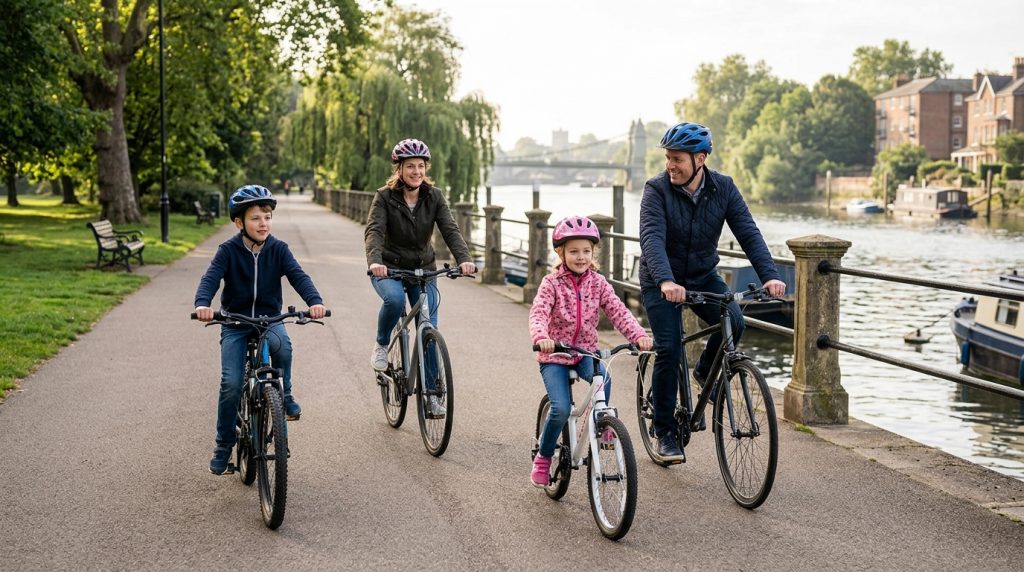
A family bike ride is a wonderful way to spend a weekend together. It gives everyone a chance to get outdoors, enjoy fresh air and discover parts of London that might otherwise go unnoticed. From peaceful park paths to riverside trails, South London has plenty of places where families can enjoy time on their bikes.
However, planning a ride with children requires a little more thought than heading out alone. Choosing a suitable route, checking everyone’s bicycle and packing the right essentials can make the difference between an enjoyable outing and a stressful afternoon.
Whether your children are learning to ride or already enjoy longer journeys, here is how to plan a safer and more enjoyable family cycling trip in South London.
1. Choose a Route That Suits the Whole Family
The first step is to choose a route that matches everyone’s cycling ability. A journey that feels easy for an experienced adult might be tiring or intimidating for a young child.
For a first family outing, look for routes with less traffic, clear directions and places where you can stop for a break. Parks and designated cycling routes can be useful starting points, although you should always check which paths permit cycling and whether any sections are shared with pedestrians.
Southwark has several places worth considering. The Rotherhithe trail is a signed route of around two miles, passing locations such as Canada Water, Greenland Dock and Russia Dock Woodland. Much of the trail is traffic-free, with cafés and picnic stops nearby. The Southwark Spine also provides a north–south cycling connection through the borough.
Before leaving home, check the route on a map and look for road crossings, busy junctions and possible diversions. A little preparation will help you choose a journey that feels manageable for everyone.
2. Start with a Short and Comfortable Ride
It is tempting to plan a long cycling adventure, especially when the weather looks promising. However, children may become tired more quickly than adults, and their confidence can vary depending on the route.
For younger riders or families cycling together for the first time, begin with a short journey. A relaxed ride with plenty of breaks is often more enjoyable than trying to cover too much distance.
Pay attention to your child’s energy levels, concentration and comfort. If they begin to struggle, shorten the route or find a suitable place to stop. There is no need to finish every planned mile.
You can gradually increase the distance as your family gains experience. The aim is to help children associate cycling with fun, exploration and independence rather than exhaustion or pressure.
3. Check Every Bicycle before Setting Off
A quick bicycle inspection should be part of every family ride. Children may not notice loose components, worn tyres or brakes that are not working properly, so adults should check their bikes before departure.
Start with the brakes. Make sure both levers work correctly and the bicycle stops reliably. Check the tyres for cuts, embedded debris and signs of damage, then inflate them to the pressure recommended on the tyre.
Next, inspect the chain, gears and wheels. The chain should be properly lubricated, the gears should change smoothly, and the wheels should turn without obvious rubbing or wobbling. Check that the saddle and handlebars are secure.
Pay particular attention to children’s bikes, as they may have been sitting unused in a shed or garage since the previous summer. If something feels loose or the brakes are unreliable, have the bicycle checked before riding.
The Highway Code also advises cyclists to ensure that their bicycles are roadworthy, with efficient brakes and working lights when cycling at night.
4. Make Sure Everyone Has a Properly Fitted Helmet
Safety equipment should fit correctly and be comfortable enough to wear throughout the journey. A helmet should sit level on the head, cover the forehead appropriately and remain secure when the wearer moves their head.
Choose a helmet designed for cycling and follow the manufacturer’s fitting instructions. The straps should be adjusted so that the helmet does not move around easily. A helmet that is too large or worn incorrectly may not provide the intended protection.
Bright clothing can also help family members stand out, particularly when riding near traffic or during cloudy weather. Reflective accessories are useful when visibility is poor.
Every bicycle should have a working bell, and adults should ensure that children understand how to use it considerately around other people.
If the ride may continue into the evening, check that each bicycle has suitable front and rear lights. In the UK, white front and red rear lights must be lit when cycling at night.
5. Teach Children Simple Road Safety Rules
Before leaving, spend a few minutes discussing how the family will ride together. Children should know when to stop, how to signal and why they must listen to instructions at junctions.
Practise starting, stopping, turning and looking around in a quiet area before introducing busier roads. Children who are still developing these skills should remain on suitable traffic-free routes under adult supervision.
When riding near traffic, adults need to pay particular attention to junctions, parked vehicles and large vehicles such as buses and lorries. Explain that drivers may not always see a cyclist, particularly near a vehicle’s blind spots.
Avoid passing stationary buses on the left between the bus and the kerb. Never assume that a driver has noticed you, even if you can see the vehicle clearly.
Follow traffic signals, give way where required and use clear signals when turning. Cyclists must not ride on pavements unless cycling is specifically permitted, such as on a designated shared-use path.
Children should also learn to look out for pedestrians. Slow down when approaching people on shared paths and leave plenty of room when passing.
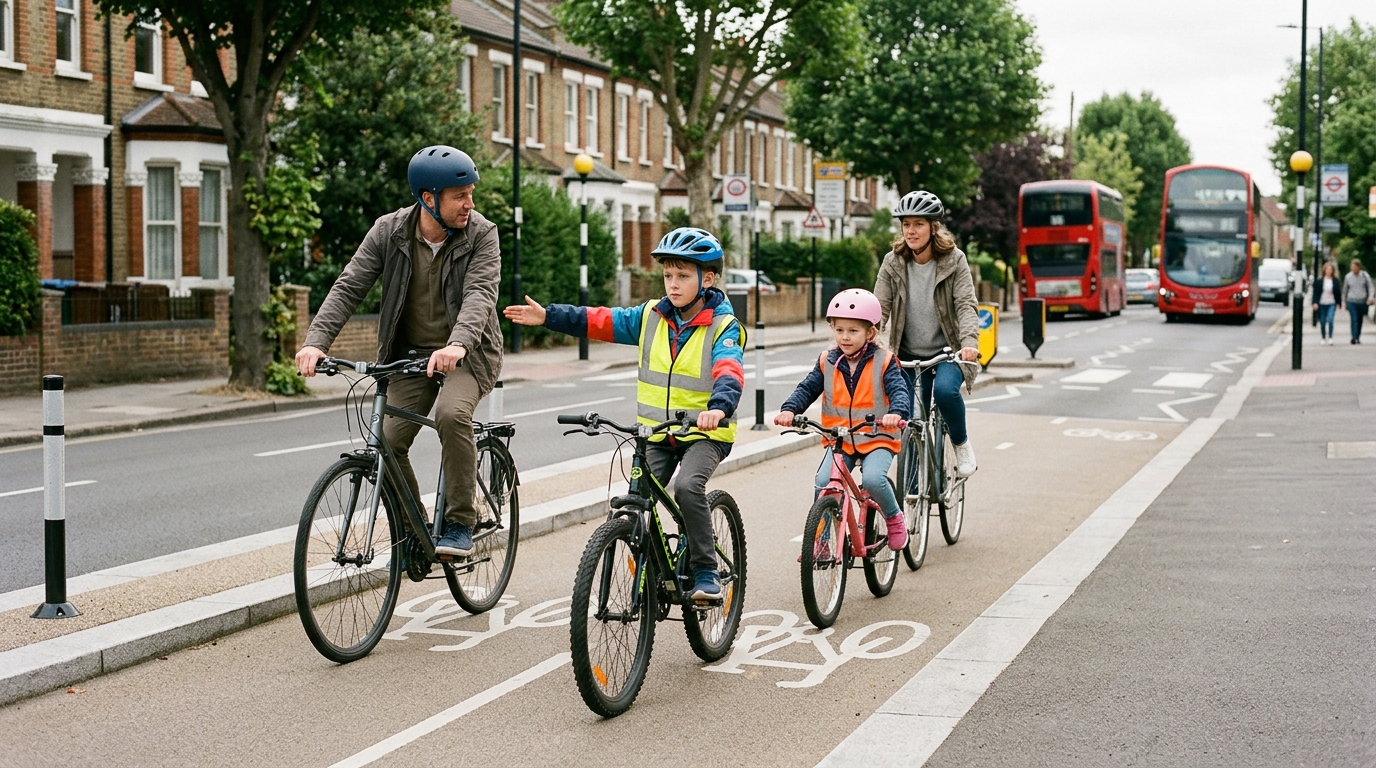
6. Keep Your Family Together on the Ride
Riding as a group requires communication and patience. Agree on a simple arrangement before setting off so that everyone knows where to ride and what to do at crossings or when the group needs to stop.
An adult should remain close enough to supervise younger or less confident cyclists. On quiet paths, let children ride at a comfortable pace while keeping them within sight. On busier sections, be prepared to stop and reassess whether the route is suitable.
Avoid rushing to keep up with faster riders. If someone falls behind, stop somewhere safe and bring the group together before continuing.
The Highway Code permits cyclists to ride two abreast and notes that doing so can be safer when accompanying children or less experienced riders. However, riders should remain considerate of other road users and move into single file when appropriate and safe.
Most importantly, agree that nobody should ride ahead through a junction or across a road without the group’s plan being clear.
7. Pack the Essentials for a Comfortable Journey
A little preparation can prevent small problems from interrupting your day. Even a short ride becomes more enjoyable when everyone has what they need.
Pack drinking water and a few snacks, particularly if younger children are joining the trip. Bring clothing suitable for the forecast, as South London weather can change during the day.
A small repair kit is useful for unexpected punctures. Depending on your bicycle and your repair skills, this might include tyre levers, a suitable spare inner tube, a pump or a multi-tool. Carry a charged mobile phone and consider keeping emergency contact details accessible.
Sunscreen can be helpful on bright days, while a lightweight waterproof jacket is useful when rain is possible. If your route includes a picnic stop, bring a small bag for rubbish and leave the area tidy.
You do not need to carry everything. Choose practical essentials that suit the length of your journey and the needs of your family.
8. Plan Stops and Choose Places to Rest
Breaks are an important part of family cycling, not a sign that the ride is going badly. They give children time to rest, have a snack and enjoy the surroundings.
Southwark Park offers gardens, a café and other facilities, making it a potential stop to consider when planning a local outing. Dulwich Park is another option, with open green spaces and picnic areas. Check current park information and cycling restrictions before choosing your route.
Plan stops before the ride, but stay flexible if somebody needs a rest sooner than expected. Choose places where the family can safely leave the cycling route without blocking pedestrians or other riders.
Remember that not every park path allows cycling. Follow local signs and dismount where required. If a path becomes crowded, slow down considerably or walk with your bicycle until there is enough space to continue.
These pauses can become some of the best parts of the day, giving children time to explore and making the trip feel like a family adventure rather than a fitness challenge.
9. Check the Weather and Daylight
Weather conditions can affect how comfortable and safe a family ride feels. Wet roads, fallen leaves, strong winds and poor visibility may make cycling more difficult, especially for younger riders.
Check the forecast before leaving and consider changing your plans if heavy rain, strong winds or other challenging conditions are expected. After wet weather, watch for slippery surfaces, puddles that hide potholes and muddy sections.
Daylight is another important consideration. Plan to finish well before dark whenever possible, particularly if your family is unfamiliar with the route. If you might return in low light, make sure the bicycles have working lights and that everyone can be seen clearly.
In colder months, check for icy or untreated paths before setting off. Southwark Council advises cyclists to assess conditions on park routes, which may remain untreated during severe weather.
A flexible plan is always better than continuing when the conditions no longer suit your family.
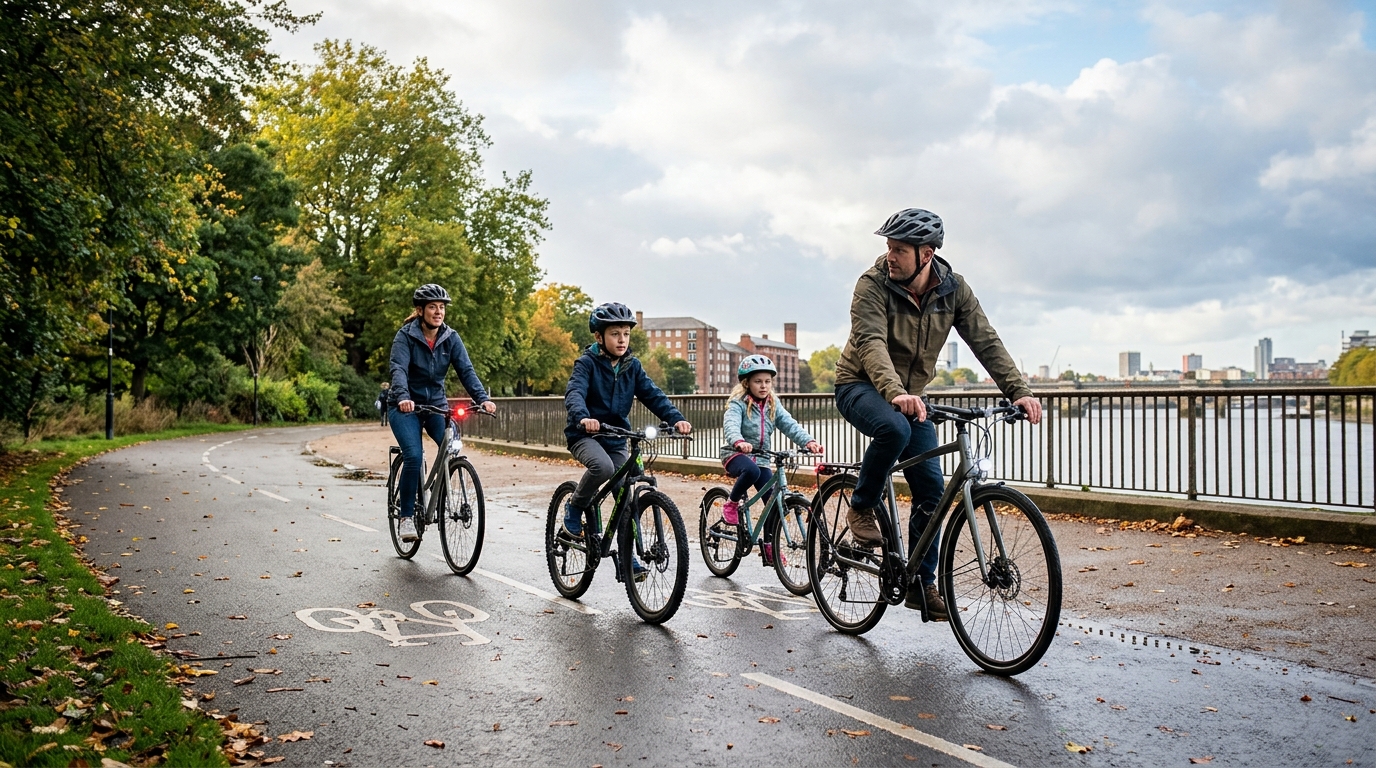
10. Make Cycling a Positive Family Habit
The best family cycling trips are those that leave everyone looking forward to the next one. Keep the atmosphere relaxed, praise children for good decisions and avoid putting pressure on them to ride faster or further than they can manage comfortably.
Let children help choose the destination, pack their own small bag or decide where to stop for a snack. Giving them a role in planning helps build confidence and teaches them to think ahead.
You can also introduce simple goals, such as learning to use gears smoothly, practising safe stopping or completing a familiar route with fewer breaks. Focus on progress rather than speed.
As your family’s confidence grows, explore different parks, riverside paths and suitable cycle routes around South London. Each trip can offer something new without requiring a complicated itinerary.
Final Thoughts
A safer family cycling trip starts with sensible preparation, a suitable route and bicycles that are ready to ride. By checking equipment, teaching children the basics of road safety and allowing plenty of time for breaks, you can make weekend rides more comfortable and enjoyable for everyone.
South London offers a variety of places for families to explore by bike, from local parks to the historic waterways of Rotherhithe. Start with a route that suits your family’s abilities, keep the journey flexible and build confidence one ride at a time.
If your family’s bicycles need a safety check, servicing or help choosing a suitable bike for a growing child, Southwark Cycles can help you prepare for your next weekend adventure. A well-maintained bicycle and the right equipment can make it easier to spend more time enjoying the ride together.


