
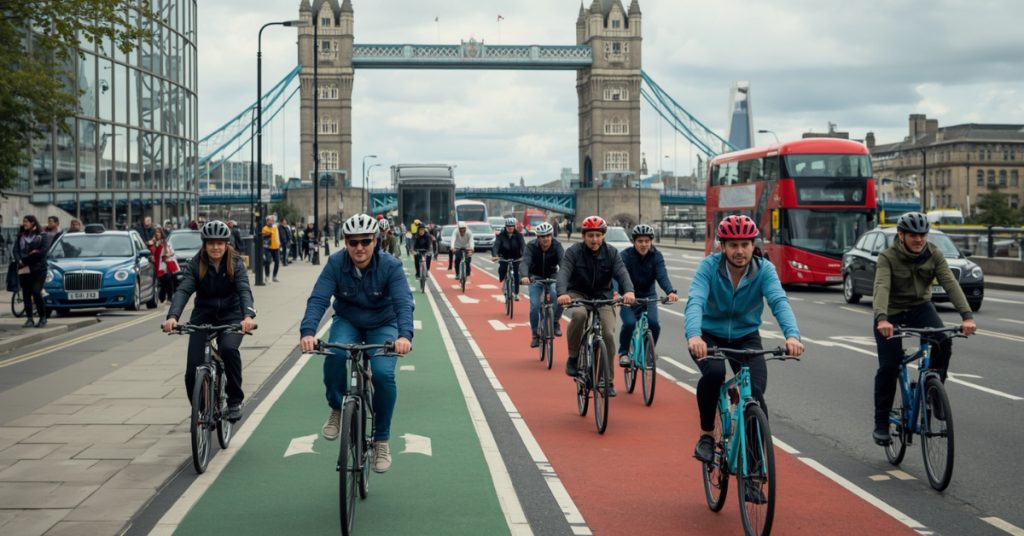
Cycling has become more than just a way to get from point A to point B it’s a lifestyle, a statement, and for many, a daily necessity. Over the past decade, London has undergone a visible transformation. Streets once dominated by cars are now shared with cyclists weaving through traffic, gliding along dedicated lanes, and exploring corners of the city many commuters rarely notice. But the question remains: is London truly the world’s most bike-friendly capital, or is it still catching up with cities that have long embraced cycling culture.
A City in Transition
Not too long ago, cycling in London felt like a bold choice something reserved for the particularly brave. Narrow roads, heavy traffic, and limited infrastructure made it intimidating for beginners. Fast forward to today, and the picture looks quite different Dedicated cycle lanes have expanded across the city, and the presence of cyclists has grown noticeably. Areas that once felt unsafe now offer protected routes, encouraging more people to consider cycling as a viable option. The shift didn’t happen overnight, but it’s clear that London has been moving in a more bike-conscious direction.
The Role of Infrastructure
One of the strongest arguments in London’s favor is its improving cycling infrastructure. Initiatives led by Transport for London have introduced Cycle Superhighways and Quietways, designed to make journeys safer and more efficient. These routes connect key parts of the city, allowing cyclists to avoid the most congested roads. For instance, cycling along the River Thames offers a scenic and relatively calm alternative to busy inner-city streets. The growing network means that commuters and casual riders alike can find routes that suit their comfort level. However, gaps still exist. Some routes feel disconnected, and navigating between them can be confusing, especially for newcomers. While progress is evident, consistency remains a challenge.

Safety: Progress with Room for Improvement
Safety is often the deciding factor for people considering cycling in a major city. London has made strides in this area, with better road markings, clearer signage, and increased awareness among drivers. That said, cycling here still requires a level of confidence. Intersections can be tricky, and not all drivers are as considerate as they should be. Compared to cities like Amsterdam or Copenhagen often seen as cycling havens London still has work to do in creating an environment where cyclists feel completely at ease. Yet, it’s worth noting that attitudes are slowly changing. More cyclists on the road often lead to greater awareness, and that visibility is helping reshape how the city interacts with two wheels.
Accessibility and Affordability
One of London’s biggest strengths is accessibility. You don’t need to own a bike to start cycling here. Public bike-sharing schemes have made it easy for residents and visitors to hop on a bike without a long-term commitment. This accessibility lowers the barrier to entry and introduces cycling to people who might not otherwise consider it. For tourists, it offers a fresh way to experience the city more personal than public transport and more flexible than walking. Still, affordability can be a mixed bag. While bike hire schemes are relatively inexpensive, owning and maintaining a bike in London can add up, especially when factoring in security measures to prevent theft.
Cycling Culture and Community
A truly bike-friendly city isn’t defined by infrastructure alone it’s shaped by its people. In London, cycling culture is growing steadily. From weekend riders exploring parks to daily commuters navigating busy streets, there’s a sense of community that continues to strengthen. Group rides, cycling events, and local advocacy groups all contribute to this culture. They not only encourage more people to ride but also push for better conditions across the city. Unlike cities where cycling is deeply ingrained in everyday life, London’s culture still feels like it’s evolving. But that evolution brings energy, diversity, and a sense of momentum that’s hard to ignore.
Comparing London to Global Leaders
When placed alongside cities like Amsterdam or Copenhagen, London doesn’t quite take the top spot at least not yet. Those cities have decades of planning behind them, with cycling embedded into their urban design from the ground up. London, on the other hand, is adapting an existing infrastructure to meet modern demands. That’s a much more complex task. Retrofitting a historic city for cycling comes with limitations, but it also shows determination. What London may lack in legacy, it makes up for in ambition. The pace of change suggests that it’s not trying to imitate other cities but carve out its own identity as a cycling capital.
The Everyday Experience
Ask a regular cyclist in London about their experience, and you’ll likely hear a mix of praise and frustration. On a good day, cycling can feel liberating faster than public transport, more enjoyable than driving, and surprisingly efficient. On tougher days, weather, traffic, and road conditions can test even the most dedicated riders. Rain is a frequent companion, and navigating busy streets requires patience and awareness. Yet, despite these challenges, many cyclists stick with it. That persistence says a lot about the appeal of cycling in London. It’s not perfect, but it’s rewarding in ways that keep people coming back.

A Look Ahead
The future of cycling in London looks promising. Plans for expanding cycle lanes, reducing car dependency, and promoting greener transport options are already in motion. As more people choose bikes over cars, the demand for better infrastructure will only grow. This creates a cycle pun intended where increased usage leads to improved conditions, which in turn attracts even more cyclists. If London continues on this path, it could very well become one of the most bike-friendly capitals in the world. The foundation is there; it’s now a matter of building on it.
Final Thoughts
So, is London the world’s most bike-friendly capital? Not quite at least not yet. But it’s closer than many might think. The city is evolving, adapting, and steadily embracing cycling as a core part of its identity. What makes London special isn’t just its progress, but its potential. It’s a city that’s learning, improving, and moving forward one bike lane at a time. And for those who ride through its streets, whether daily or occasionally, that journey is already something worth being part of. As the cycling scene continues to grow, local initiatives, passionate riders, and community-driven efforts like those you might find through Southwarkcycles play an important role in shaping what comes next.