
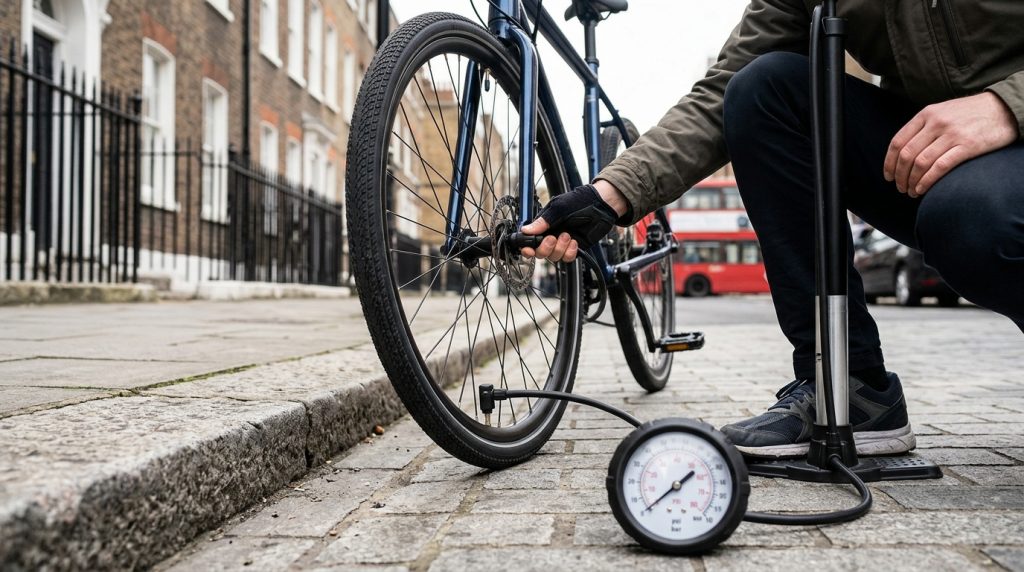
Bicycle tyre pressure is easy to overlook, especially when your bike seems to be running normally. However, the amount of air inside your tyres affects how comfortably you ride, how well your bike grips the road and how much effort you need to pedal. Tyres that are too soft can make cycling harder, while tyres that are overinflated may feel harsh and lose grip on uneven surfaces.
For cyclists travelling around London, getting tyre pressure right is particularly useful. Daily journeys can involve smooth tarmac, potholes, rough cycle lanes, drain covers and wet roads. The right pressure helps your bike handle these changing conditions more predictably.
So, what is the correct tyre pressure for your bicycle? The answer depends on your tyre size, bike type, body weight, and luggage and riding conditions. Understanding these factors will help you find a pressure that suits your everyday journeys.
Why Does Bicycle Tyre Pressure Matter?
Tyres are the only parts of your bicycle that make direct contact with the ground. Their pressure affects how they respond to the road beneath you.
Comfort: Tyres inflated to a suitable pressure absorb some of the vibration caused by uneven surfaces. This can make longer rides more comfortable, particularly on roads with potholes or rough patches.
Grip and handling: A tyre needs an appropriate contact area with the ground to provide reliable traction. Excessive pressure can make the ride feel harsh, while insufficient pressure may cause the tyre to deform too much during cornering.
Pedalling efficiency: Underinflated tyres can increase rolling resistance, meaning you may need to work harder to maintain your speed. However, pumping tyres to the maximum pressure is not automatically faster. The best setting balances efficiency, comfort and grip.
Puncture protection: Tyres that are too soft can be more vulnerable to pinch punctures when the wheel strikes a pothole or kerb, particularly when using inner tubes. Correct inflation also helps the tyre maintain its intended shape.
What Is the Recommended Tyre Pressure for Different Bikes?
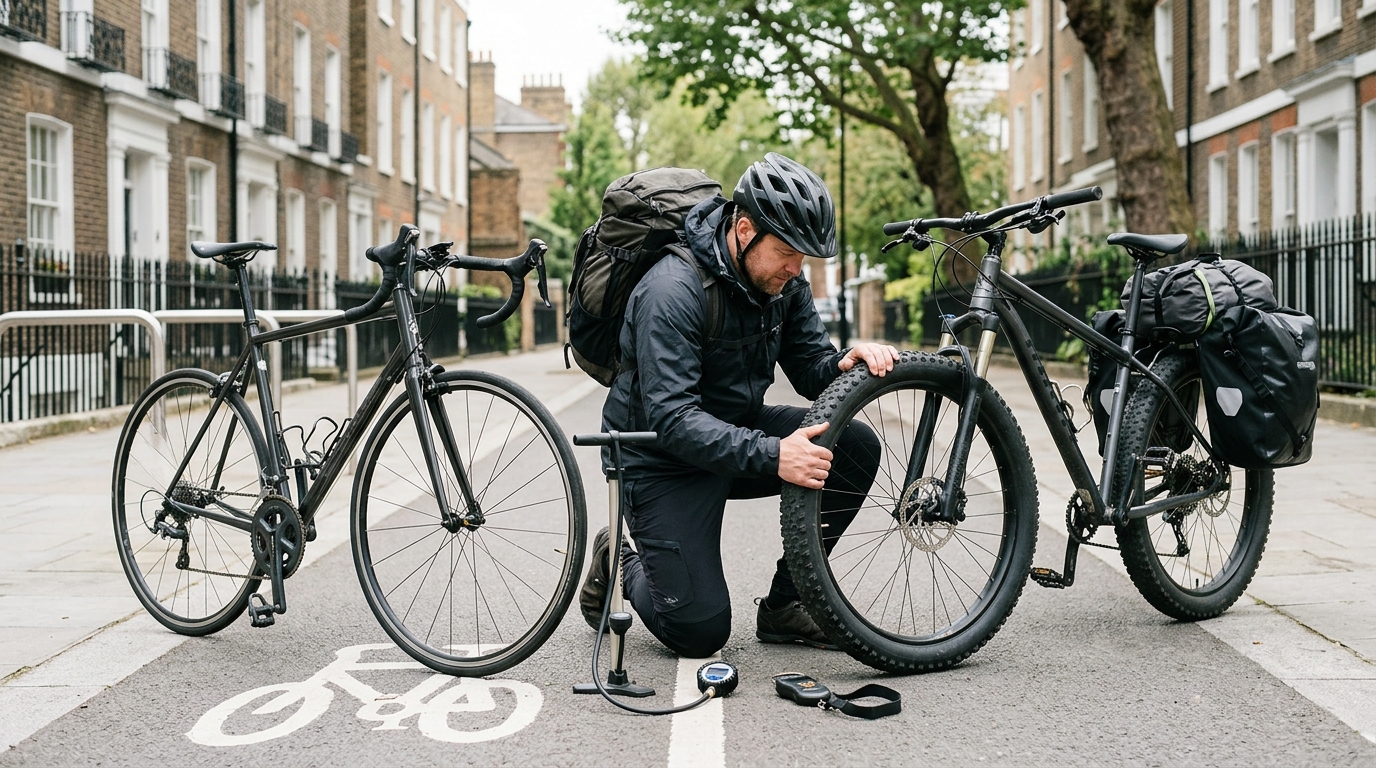
There is no single pressure that works for every bicycle. Road bikes usually have narrower tyres than mountain bikes, while hybrids and commuter bikes often sit somewhere between the two.
The following figures are broad examples to help you understand the differences, not universal recommendations for every tyre.
- Road bikes: Narrow tyres often require higher pressure than wider tyres. Depending on tyre width and rider weight, some road setups operate around 60–100 PSI.
- Hybrid and commuter bikes: Many everyday bikes use pressures somewhere around 40–70 PSI, depending on tyre width, load and the manufacturer’s guidance.
- Mountain bikes: Wider tyres generally operate at lower pressures, often around 20–35 PSI, depending on the terrain, tyre construction and whether inner tubes are fitted.
- Folding bikes: Pressure varies considerably with tyre width, wheel design and the load carried. Always check the tyre’s recommended range.
- Electric bikes: The correct pressure depends on the fitted tyres, the bicycle’s load and the manufacturer’s instructions. The extra weight of an e-bike and its rider makes correct inflation particularly important.
These examples overlap because tyre width, construction and load matter more than the bike’s label alone. Always check the recommended range printed on your tyre and follow the bicycle and wheel manufacturer’s limits.
How to Find the Correct Pressure for Your Tyres
The easiest place to start is the tyre sidewall. Many bicycle tyres display a recommended pressure range or minimum and maximum limits. You may see the figures in PSI, bar or both.
PSI stands for pounds per square inch, while bar is another unit used to measure pressure. Most bicycle floor pumps display PSI and bar, so you can use whichever unit matches the marking on your tyre.
Check the following before inflating your tyres:
- Read the sidewall markings. Identify the permitted pressure range for your particular tyre.
- Check the wheel manufacturer’s guidance. Some rims have their own pressure limits, which must also be respected.
- Consider your total load. Your weight, clothing, bags and other luggage affect the pressure needed to support the bicycle.
- Think about your usual routes. Smooth roads and rough surfaces may call for different settings within the permitted range.
- Use a pressure gauge. A pump with a gauge gives a more reliable reading than judging pressure by squeezing the tyre.
The maximum figure printed on a tyre is a limit, not necessarily the pressure you should use every day. Choose a suitable pressure within the permitted range rather than automatically inflating to the highest number.
How Tyre Width and Rider Weight Affect Pressure
Tyre width is one of the main factors to consider. A wider tyre can support a given load at a lower pressure than a narrower tyre, provided the tyre and rim are designed for that setup.
For example, a narrow road tyre generally needs more pressure than a wide mountain bike tyre. Inflating both to the same PSI would not produce the same handling or comfort.
Rider weight matters as well. A heavier rider or someone carrying a loaded pannier bag places more weight on the wheels. This may require a higher pressure than a lighter rider would need on the same tyres.
The front and rear tyres do not always need identical pressures. More weight often rests on the rear wheel, so its tyre may require slightly more air. The correct difference depends on the bicycle, riding position, tyre width and load.
Avoid making large changes without checking the manufacturer’s recommendations. Small adjustments within the approved range are a sensible way to find a comfortable setup.
Should You Use Different Pressure on Wet or Rough Roads?
London roads can change considerably over a short journey. You might begin on smooth tarmac and then encounter broken road surfaces, metal covers or uneven paving.
On rough surfaces, a suitable pressure that is slightly lower within the recommended range can help a tyre absorb vibration and maintain contact with the ground. Wider tyres often offer more room for adjustment.
Wet weather also makes grip important. However, simply reducing pressure does not guarantee better traction on a wet road. Tyre condition, tread design, speed and braking technique all matter.
If you cycle regularly in the rain, inspect your tyres for cuts, embedded glass and worn tread where applicable. Brake earlier, take corners carefully and avoid sudden movements on slippery surfaces.
Never lower the pressure below the tyre manufacturer’s permitted minimum just to improve comfort or grip. Excessively low pressure can damage the tyre or rim and make the bicycle less stable.
How to Inflate Your Bicycle Tyres Correctly
Inflating your tyres is straightforward once you know the correct pressure and valve type.
Step 1: Identify the valve. Presta valves are narrow and usually have a small screw at the tip. Schrader valves are wider and resemble the valves used on many car tyres. Your pump must be compatible with the valve fitted to your bike.
Step 2: Check the tyre. Look for cuts, bulges, embedded debris or damage to the sidewall. Inflation will not repair a damaged tyre.
Step 3: Attach the pump. Connect the pump securely to the valve, following the pump manufacturer’s instructions.
Step 4: Inflate gradually. Pump until the gauge shows a suitable pressure within the permitted range. Avoid exceeding the lowest applicable maximum limit specified by the tyre and wheel manufacturers.
Step 5: Check the reading. Remove the pump carefully and refit the valve cap. If the tyre loses air quickly, investigate the cause instead of repeatedly pumping it up.
Step 6: Inspect the wheel. Check that the tyre sits evenly around the rim and that there are no visible bulges or signs of damage.
A track pump with a built-in gauge is useful for home maintenance. A compact pump or pressure gauge is also worth carrying on longer journeys.
How Often Should You Check Your Tyre Pressure?
How frequently you need to inflate your tyres depends on the type of tyre, whether you use inner tubes or a tubeless setup, and how often you ride.
For everyday commuting, checking pressure at least once a week is a useful habit. Narrow road tyres may need attention more frequently, while some wider tyres can maintain their pressure for longer. Check before a long journey and whenever the bike feels unusually sluggish or unstable.
Inner tubes naturally lose some air over time, even when there is no puncture. Tubeless tyres can also lose pressure, so neither system should be left unchecked.
Make a quick tyre inspection part of your regular bicycle maintenance. It takes only a few minutes and can help you spot problems before they interrupt your journey.
Common Bicycle Tyre Pressure Mistakes to Avoid
A few simple mistakes can affect the way your bike rides.
- Inflating to the maximum every time: The highest permitted pressure is not automatically the best setting.
- Ignoring the tyre sidewall: Guessing can lead to underinflation or overinflation.
- Using your thumb as the only test: Tyre firmness by hand is not an accurate pressure measurement.
- Forgetting about luggage: A loaded bike may need a different pressure from one ridden without bags.
- Ignoring slow punctures: A tyre that repeatedly loses air may have a damaged tube, valve or tyre.
- Overlooking tyre condition: Correct pressure cannot compensate for worn or damaged rubber.
If your tyres keep losing air, your bicycle feels unstable or you are unsure which pressure to use, a professional inspection can help identify the problem.
Final Thoughts
Correct tyre pressure is a small part of bicycle maintenance, but it can make a noticeable difference to comfort, handling and everyday reliability. Check the markings on your tyres, use a pressure gauge and adjust the pressure to suit your bicycle, load and usual riding conditions. A quick weekly check is a sensible habit for regular commuters and recreational cyclists alike.
For help with bicycle maintenance, tyre checks and choosing the right equipment for your bike, Southwark Cycles can help you keep your bicycle in good condition for journeys around London. Whether you use your bike for commuting, shopping or weekend rides, looking after your tyres is a practical step towards safer, more comfortable cycling.


